back to noctis shrine page
LUMIN SYSTEM
Lumin is a class S00 star, or a yellow star. S00 stars are the most likely to contain life on the planets that orbit them, and Lumin is no exception. It has a total of nine planets and a smattering of moons and asteroid belts. My full PDF write-up of this system can be found here (click to download). The PDF was last updated 12/24/25.
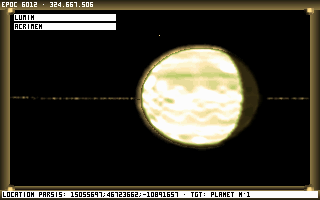 Acrimen is the first planet in Lumin's system. It is a large unstable planet which is not safe for landing on, so all my observations had to be done from the Stardrifter. Its banding shows inconsistent weather, and green, yellow and brown gases swirling across the planet in a lateral direction. It has a very thin asteroid belt orbiting it. Other planets further in the system have asteroid belts which are almost imperceptible from the interior, but Acrimen's is plainly visible, albeit small.
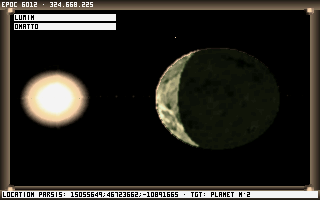
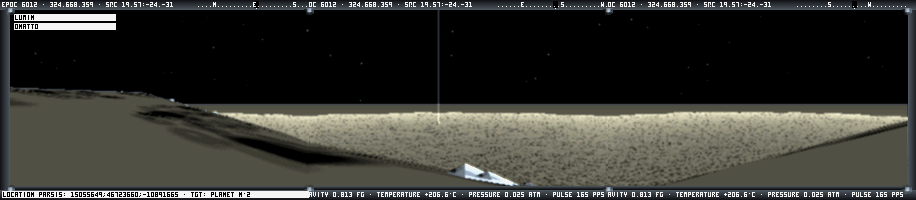 Onatto is the second planet orbiting Lumin. It's also the first planet with a solid ground that we're able to land on. From space, you can see its deep craters and speckled grayish-yellowish surface. Upon descending, there's nothing remarkable to note about Onatto. It has small mountains, small craters, and not much activity at all. The craters and mountains are actually more sparse than you'd think, so a lot of the view is just of the flat landscape surrounding you.
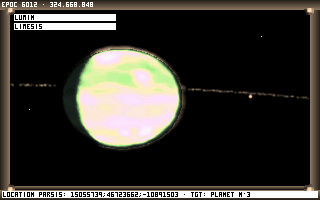 Limesis is third in the Lumin system. Like Acrimen, it's an inconsistent planet unfit for Stardrifter landings. It has a similar palette to Acrimen as well, however it has a lot more bright greens and yellows, and it is more erratic as opposed to the clear bands visible with the former gas planet.
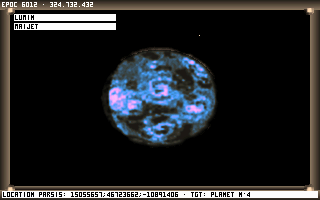
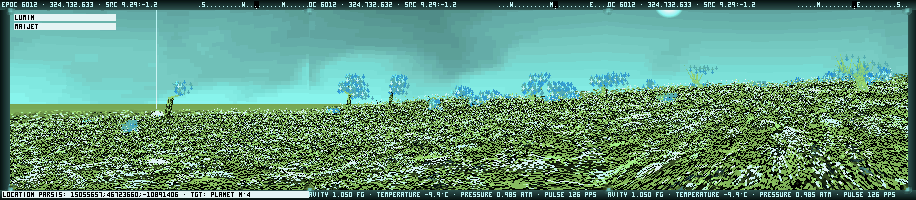 Maijet is the most interesting planet in Lumin's system. From orbit, you can see huge, swirling storms in its atmosphere. After carefully avoiding those areas on my deployment to the surface, I was met with lush green grasslands with large trees and bushes. Birds rarely dotted the blue-green sky, and at one point I even spotted a hopper in the distance! I want to return at some point and evaluate the storms, as well as to see if I can locate any large bodies of water.
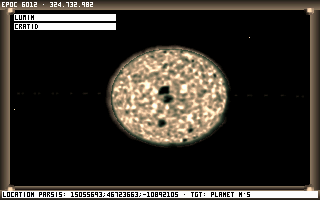
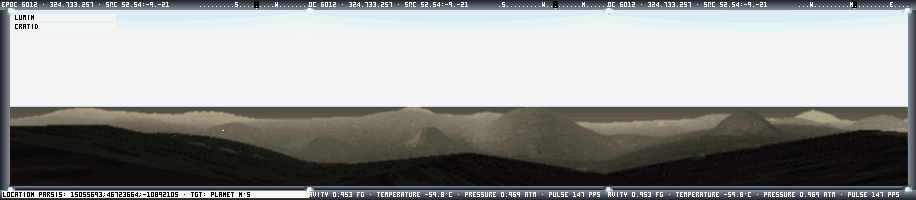 Cratid, despite its relative desolateness, is actually a bit interesting. It's the first body in the system that is specified as being rich in quartz. The surface is very topsy-turny, with large mountains and hills alongside decently sized craters. Cratid is like Onatto on steroids. Also similar to Onatto, it has an asteroid belt encircling it. The ring is almost imperceptible to the naked eye from orbit - it's super far out and thin to bat. The photograph I captured of the planet doesn't do it justice, but you really can't see it much better in person anyways.
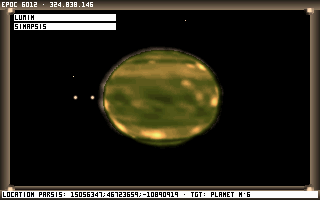 Sinapsis is the last of the planets which we cannot land on. Something interesting is that all of these similar planets have a yellowy, greeny, brown coloration to them. Not much to report on this one at this time.
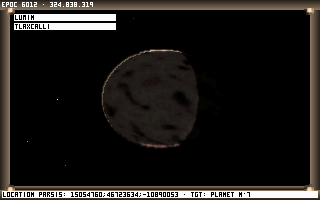
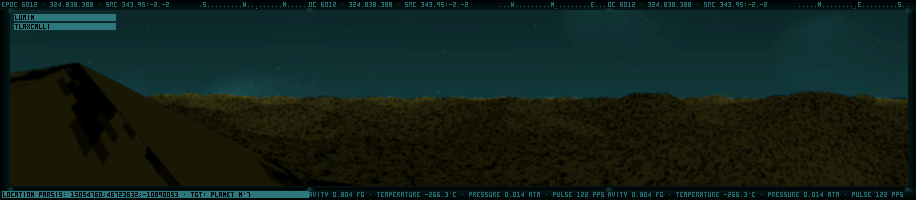 Tlaxcalli is a very average planet. It's our first planet in this system with a thin atmosphere, which basically just means that it has very intense and varied terrain and coloration as it's weathered away by solar winds and other forces. Despite this, Tlaxcalli was unremarkable during my two landings to its surface. I will have to return and fully investigate it before writing it off completely.
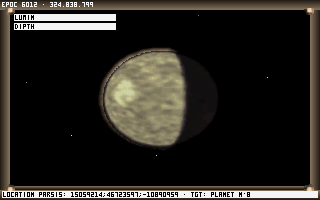
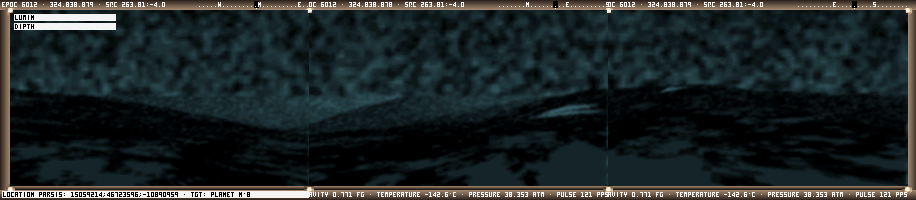 Dipth, our only thick atmosphere planet, is a bit interesting! From my Stardrifter, it looks like a very dusty, sand colored planet. Upon descending, I was a bit shocked to see the surface was actually much darker, and the sky was so dark it began to blend in with the far away landscapes. The thick atmosphere combined with it's distance from the star, Lumin, means most of the planet is enshrouded. I have seen darker planets of this type, though, so navigation was still possible!
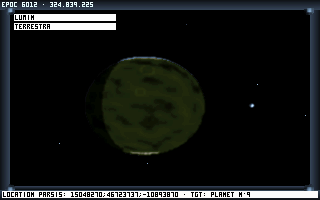
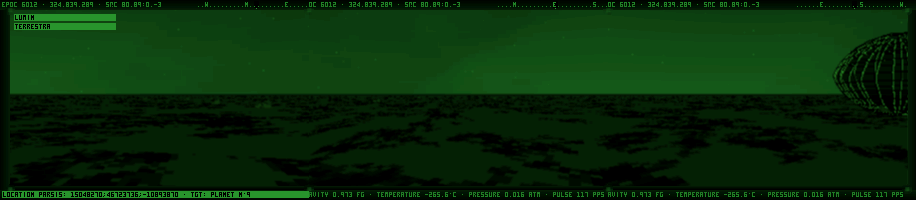 Terrestra is Lumin's last large-body planet. It is another thin atmosphere, which means I knew I was in for a treat upon my investigation. Its appearance from space was nothing to write home about, although it did appeal to me that there were some crater rings that were bright and spread out enough to individually count. The sky upon landing was a surprisingly bright neon green. The ground, similarly, was a deep but vibrant green. I took my time to land at a few different spots on Terrestra, and noted how some areas were almost completely flat (like the one pictured above), and some had swaths of rolling hills. This interesting planet seems like a fitting end for an insteresting star system.
top of page